
Ballistic protection levels are defined by the U.S. National Institute of Justice (NIJ), which sets internationally recognised standards for body armour performance.
These standards indicate the level of protection a ballistic vest or plate is designed to provide against specific types of ammunition.
The current standard commonly referenced is NIJ Standard 0101.06.
Body armour is classified into different threat levels based on the type of rounds it is designed to stop.
Soft armour vs hard armour
Lower levels are usually soft armour panels made from materials such as:
- Kevlar
- Twaron
- Aramid fibres
- UHMWPE
Higher levels normally use hard plates made from:
- Steel
- Ceramic
- Polyethylene
- Composite materials
Higher protection levels generally mean more protection, but also more weight and less flexibility.
The correct level depends on the intended use.
NIJ protection levels
Level IIA: Protection against lower-velocity handgun rounds.
Level II: Protection against standard handgun rounds.
Level IIIA: Protection against most handgun rounds, including higher-velocity handgun ammunition.
Commonly used in soft body armour.
Level III: Protection against rifle rounds when using hard armour plates.
Level IV: Protection against armour-piercing rifle rounds when using certified hard plates.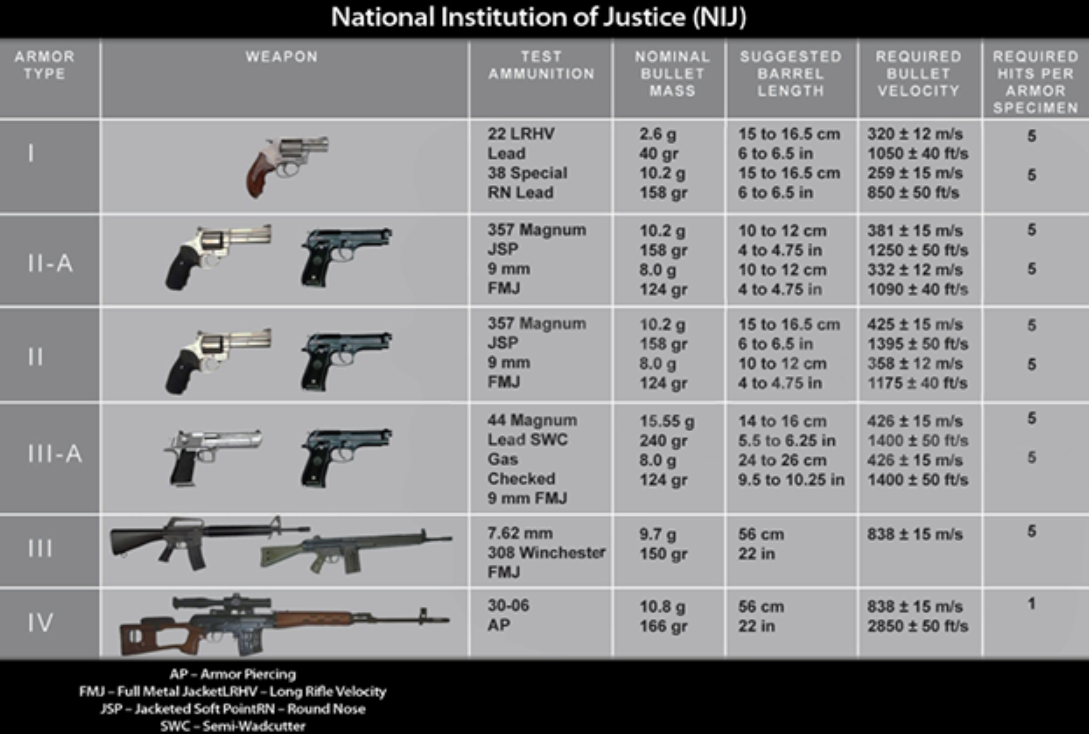
Important notes
- NIJ ratings indicate tested performance under controlled conditions
- No body armour can guarantee complete protection in all situations
- The correct protection level depends on the threat and intended use
- Some ballistic products may require special order or import
- Availability may depend on supplier stock or regulations
If you are unsure which level you need, please contact us for assistance: sales@tdsa.co.za
View ballistic protection products
The TDSA website is open 24/7.